Baseball / 2005–2021
The Foam Asterisk
How a Los Angeles baseball fan turned a familiar stadium souvenir into a protest against the steroid era — and returned to the ballpark with a new version sixteen years later.
The birth of the Foam Asterisk
TomPaul Wilson wanted to keep going to baseball games. What he did not want was to accept the steroid era as an inevitable part of the sport. For a fan who loved spending an afternoon at Dodger Stadium, the question was how to express his objection without giving up the game itself.
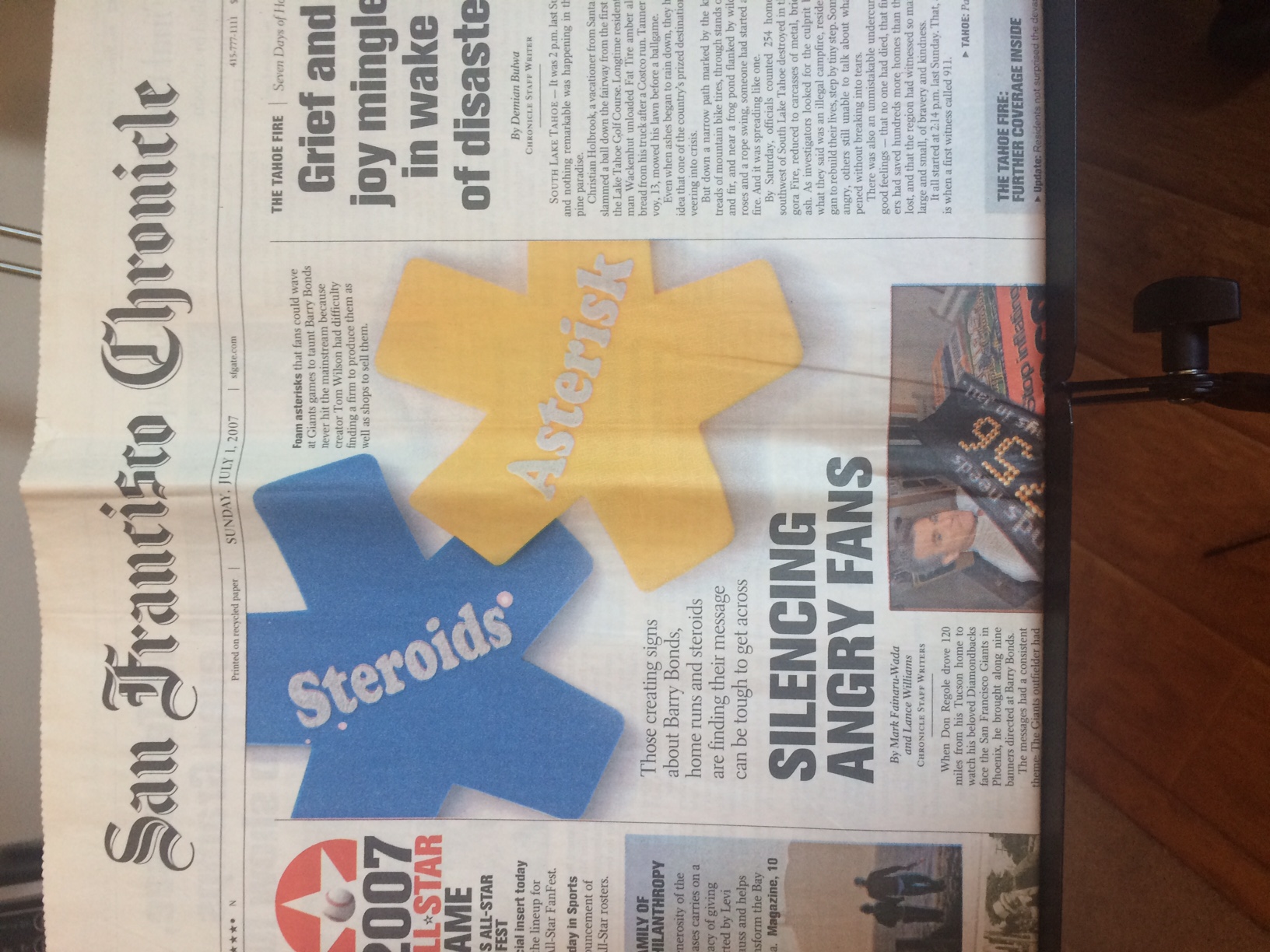
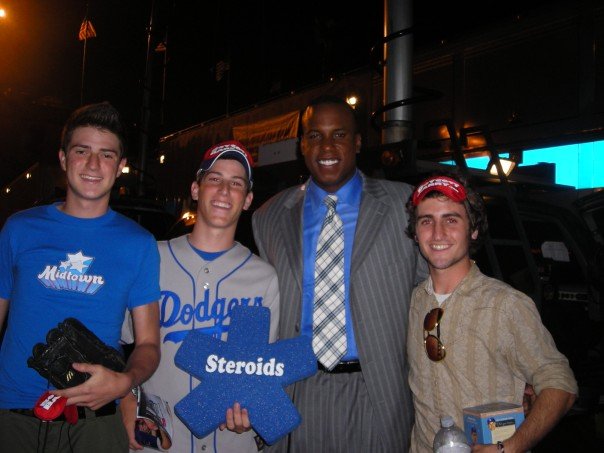
His answer was a variation on the familiar foam finger. Instead of proclaiming that a team was number one, the oversized foam asterisk invited spectators to question the records they were watching being set. Some carried the word “Steroids”; others simply read “Asterisk.” The object was designed to communicate without a speech or a personal insult.
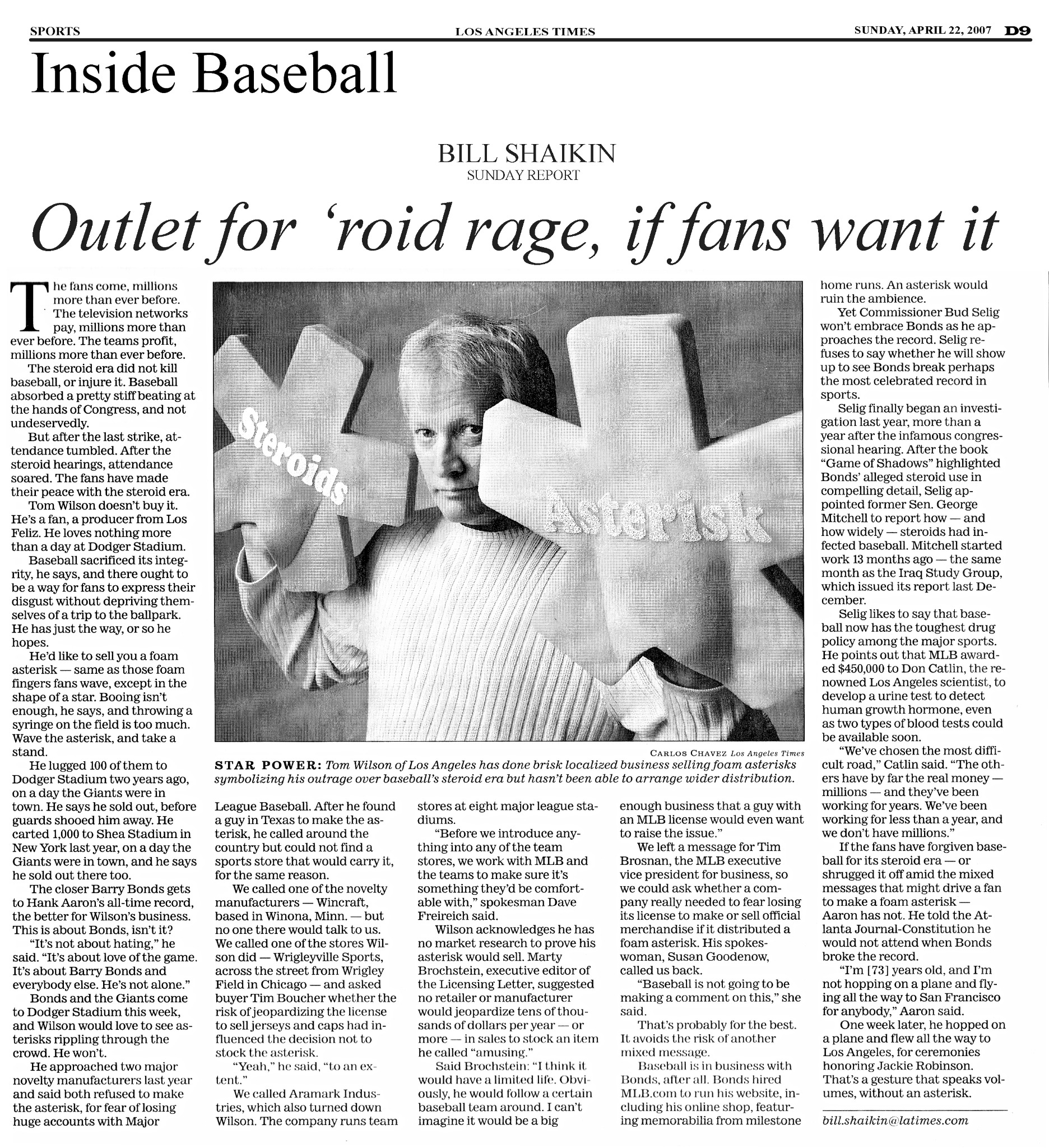
By April 2007, the campaign had attracted the attention of Los Angeles Times baseball writer Bill Shaikin. His Sunday report traced Wilson’s efforts back to a Giants game at Dodger Stadium in 2005, where Wilson said he sold 100 asterisks before security moved him along. The following year, he took 1,000 to Shea Stadium in New York, again during a visit by the Giants. Wilson told Shaikin that he sold out there as well.
“It’s not about hating. It’s about love of the game.”Tom Wilson, Los Angeles Times, April 22, 2007
Taking on baseball’s commercial establishment
Getting the asterisk manufactured proved more difficult than designing it. Wilson approached novelty suppliers, only to discover that some were reluctant to produce a protest item while doing business with Major League Baseball. He eventually found a manufacturer in Texas, but faced similar resistance from sports merchandise retailers.
Shaikin contacted businesses himself. A retailer near Wrigley Field acknowledged that concern about its licensing relationship had influenced its decision. Aramark, which operated stadium shops, explained that merchandise decisions involved the league and teams. These responses gave the story a significance beyond one fan’s unsuccessful attempt to sell a novelty product.
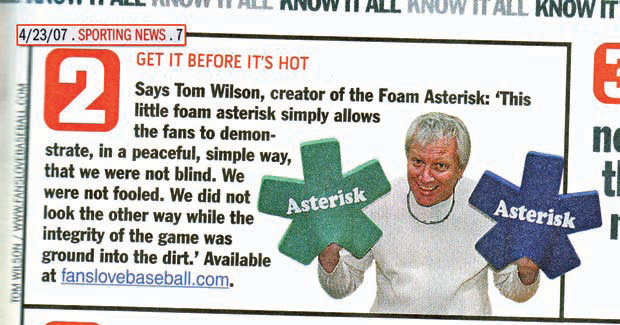
Without a conventional distributor, Wilson handled orders himself. He recalls packing the foam shapes into pizza boxes for shipping. The campaign nevertheless gained national attention. Sporting News featured the product on April 23, 2007, and on July 1 the San Francisco Chronicle placed a photograph of the asterisks on its front page.
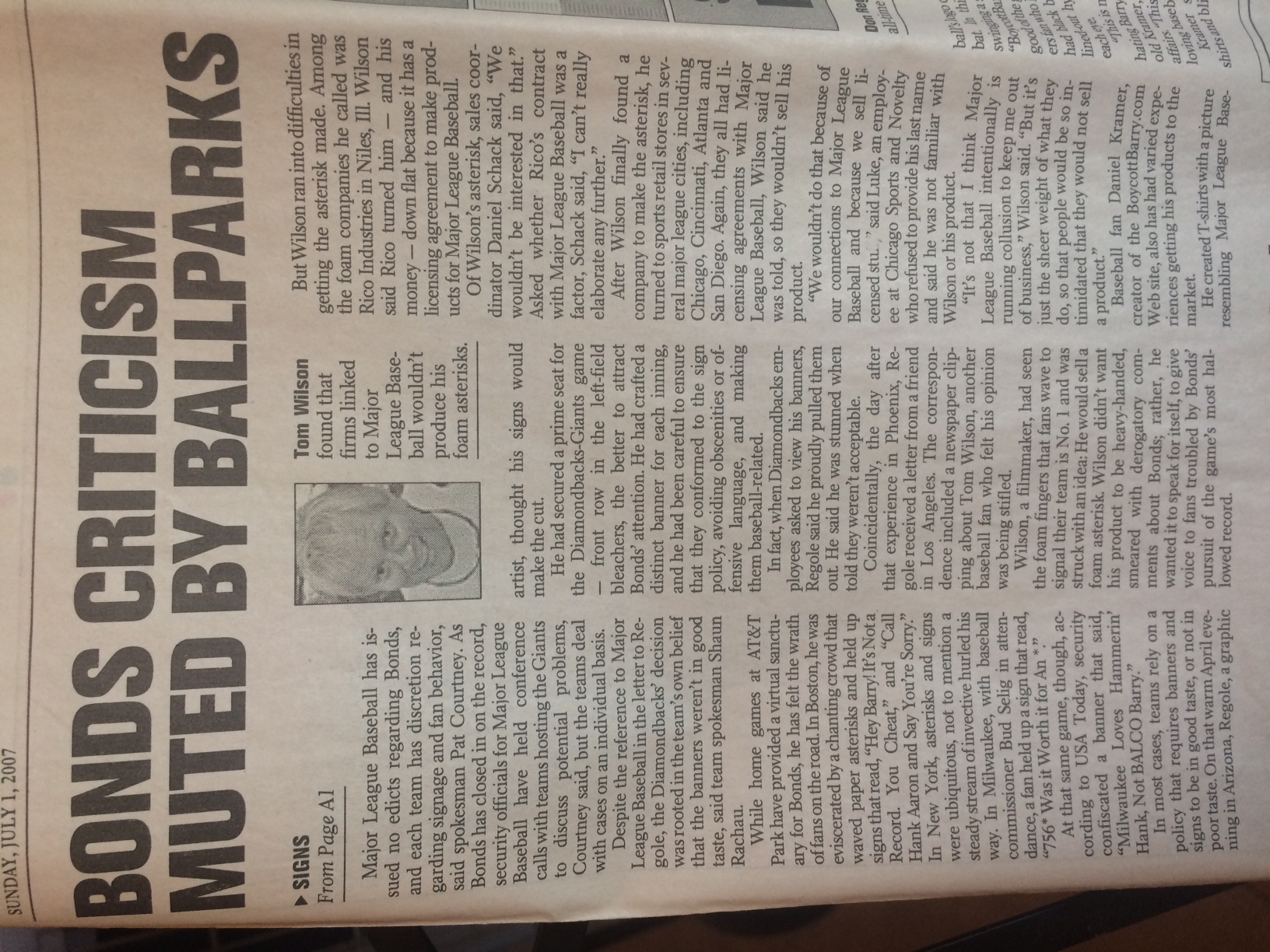
Chronicle reporters Mark Fainaru-Wada and Lance Williams examined the restrictions confronting fans who wanted to express their objections as Barry Bonds approached the career home run record. Their reporting included Wilson’s manufacturing and distribution difficulties. Wilson did not allege an organized conspiracy against his business; he described the influence of baseball’s commercial relationships on the decisions of individual suppliers and retailers.
Wilson also recalls appearing on NBC and responding to a discussion about stadium sign restrictions by describing the asterisk as a seat cushion. His punch line was simple: “You can sit on your asterisk.” Humor was part of the protest, not a substitute for its message.
Preserved in Cooperstown
According to Wilson, the National Baseball Hall of Fame library subsequently added his press clippings to its collection. For a campaign that began with an ordinary fan’s objection to the direction of the sport, the preservation of its newspaper coverage provides a fitting conclusion to the original episode.
Original campaign footage
Watch the Foam Asterisk video ↗
The asterisk returns: Astroisk
In 2021, Wilson returned to the idea in response to the Houston Astros sign-stealing scandal. The controversy was different from the steroid era, but the underlying concern was familiar: how should fans respond when the integrity of the competition is called into question?
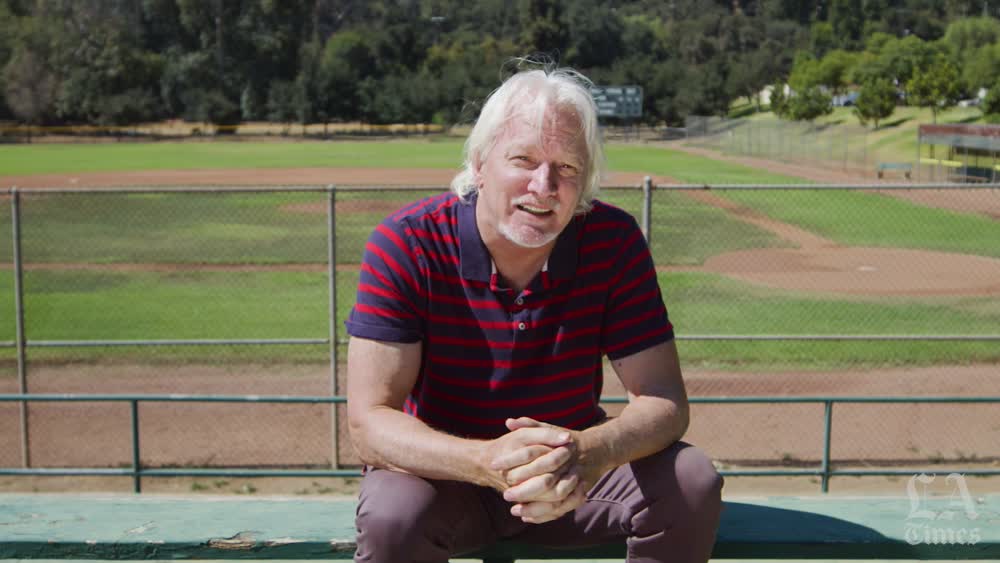
The new campaign, Astroisk, adapted the asterisk to the Houston team’s name. Once again, Wilson used a simple visual device to express an objection to the way baseball history was being written. The Los Angeles Times documented the renewed protest in a video profile, bringing the two campaigns together.
 ▶ Watch video
Watch the Los Angeles Times profile on YouTube ↗
Neither campaign required fans to abandon baseball. Both offered a way to remain spectators while refusing to treat the game’s controversies as settled history. For Wilson, the asterisk was a means of keeping that distinction visible.