Film / Independent cinema / Audience archive
They Shoot Movies, Don’t They?
A film about a filmmaker who loses everything. An audience that could not agree whether it had witnessed fiction or fact. And a publicity meeting in which the distinction became the entire story.
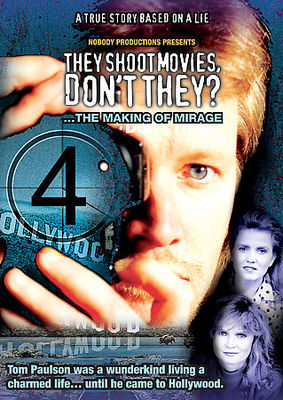
The film within the film
TomPaul Wilson and Frank Gallagher made They Shoot Movies, Don’t They? — The Making of Mirage, a fictional documentary about Tom Paulson, an aspiring director struggling to complete and sell a film called Mirage. Gallagher's camera follows Paulson through meetings, personal setbacks and mounting desperation. The film ends with an implied suicide, presented with the visual language of documentary.
Wilson portrayed Paulson. He and Gallagher wrote the film together. The central device was straightforward but unsettling: the film asked viewers to decide what they believed they were watching, without offering the familiar assurances of a conventional drama.
The Hollywood meeting
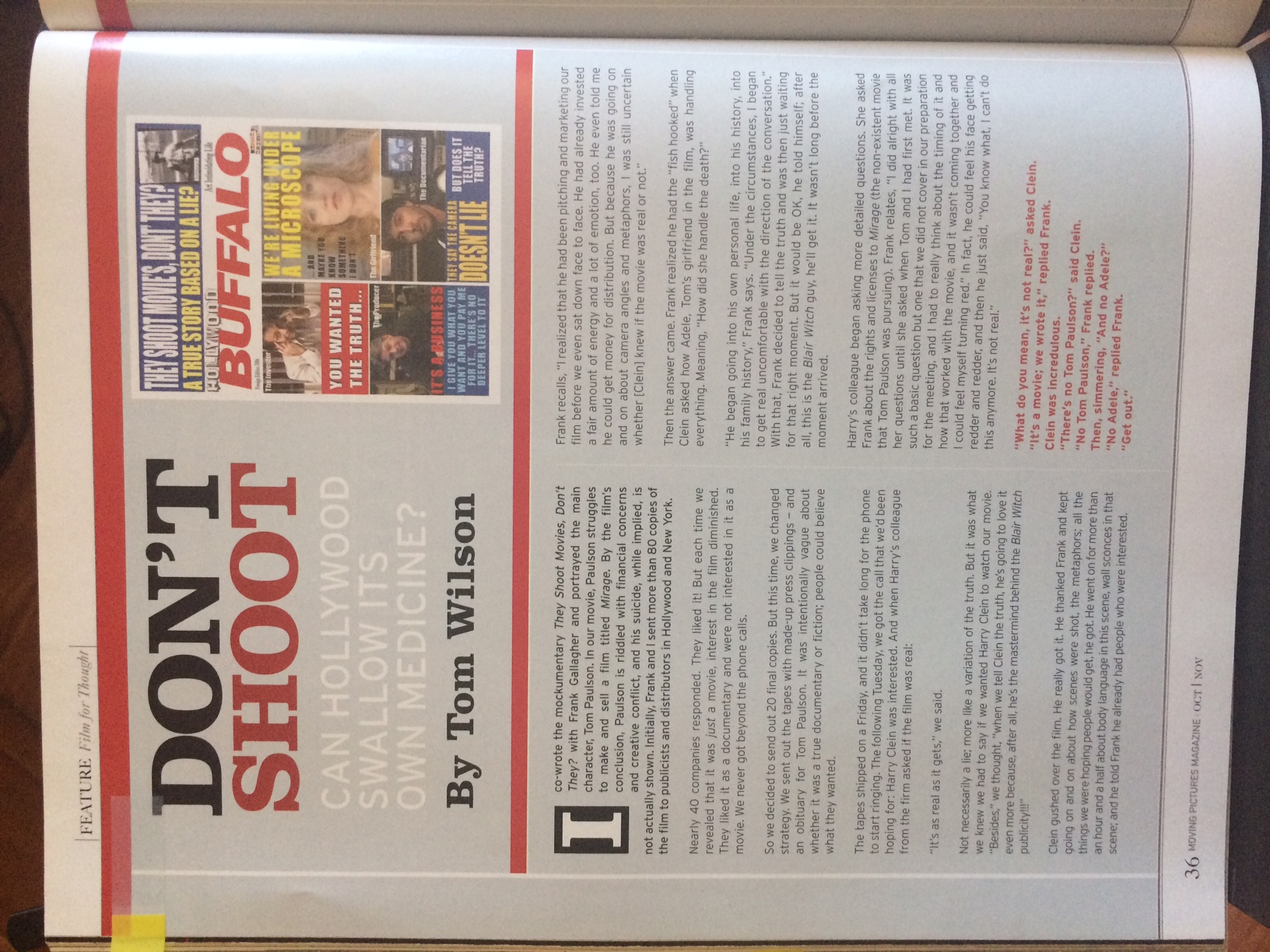
Before the film's television broadcast, Wilson and Gallagher tried to find distribution. In a firsthand account dated July 1, 2001, Wilson described sending more than 80 copies to publicists and distributors. According to his account, some prospective buyers lost interest when told the supposed documentary was fictional.
They changed their approach. A later mailing included fabricated press clippings and an obituary for the fictional Paulson. Hollywood publicist Harry Clein became interested. Gallagher attended a meeting without Wilson, whose character was presumed dead.
According to Gallagher's recollection, Clein enthusiastically discussed the film's technique and potential, even raising the prospect of financing. But when questions turned to the characters' personal lives and the rights to the fictional Mirage, Gallagher admitted the truth: Paulson was not a real dead filmmaker. The film was scripted.
The meeting collapsed. In Wilson's account, Clein told Gallagher to leave; a subsequent attempt to apologize with wine and flowers went badly too. What had been valuable as an apparent documentary suddenly became, in Clein's eyes, an unwelcome fiction. The episode makes the film's underlying question tangible: why did the perceived factual status of the story change its worth?
The account above is attributed to Wilson and Gallagher, not presented as independently verified testimony about the private meeting. Read Wilson's original 2001 account, preserved on Ray Carney's website.
Broadcast, belief and disbelief
On August 23, 2000, the film aired on Bravo/IFC's DVTheater strand. Viewers were invited to submit reactions. The surviving response collection begins with comments posted just minutes after the film ended. Some viewers accepted the story as documentary; others identified it as a mockumentary; many remained uncertain.
The record is more revealing than a simple claim that the film “fooled everybody.” Viewers argued over acting, editing, the apparent ethics of the filmmakers and the believability of the ending. Some were angry. Some were moved. Some recognized the fiction and admired the construction. The disagreement is part of the film's documented reception.
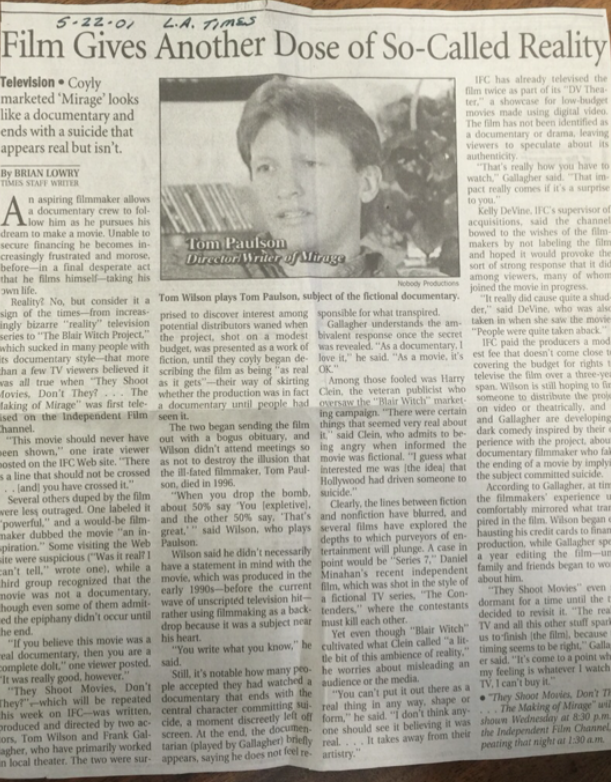
Contemporary outside coverage followed. In May 2001, the Los Angeles Times examined the film and the unusual audience response. The original newspaper image is reproduced below for readers who cannot access the publication's website.
The contemporary press

The audience's own words
The most extensive surviving record is the audience-response compilation, preserved in its original sequence rather than edited down to favorable quotations. It includes disagreement, skepticism, criticism and emotional responses. That makes it more useful as historical evidence than a selection of endorsements.
For academic study
Audience Reactions: Complete Collection
Sources and further reading
- Los Angeles Times, May 22, 2001 — contemporary independent reporting; archival image reproduced above.
- Tom Wilson, “Imaginative Truth,” July 1, 2001 — firsthand account of the distribution effort and publicity meeting.
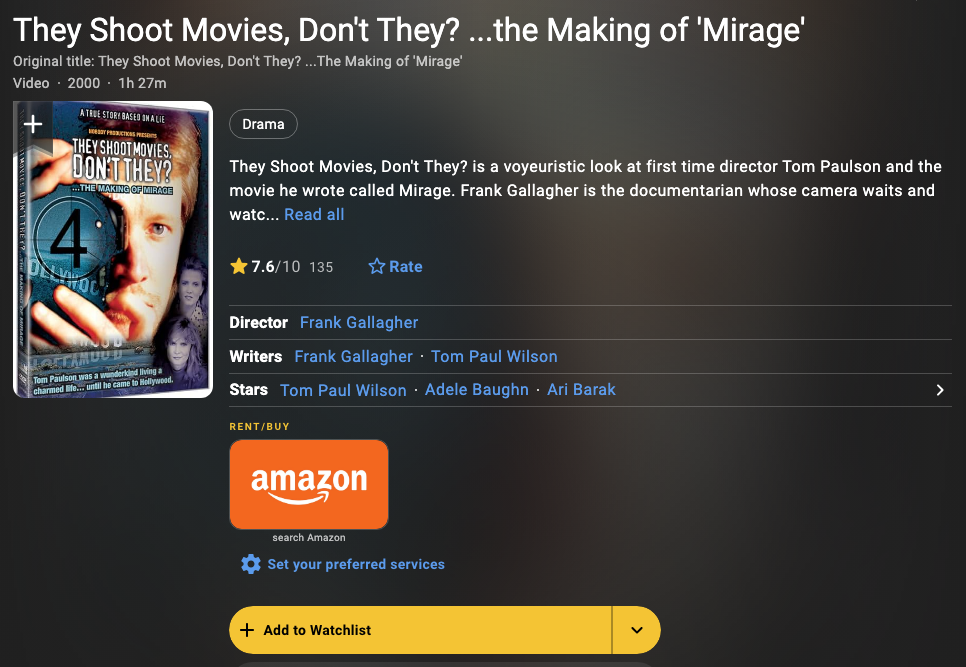
- IMDb film listing — filmographic reference.
- DVD Savant / DVD Talk review — independent criticism.
- Film Freak Central review — independent criticism.